
Lafayette County’s Multi-Day Report Landscape
The Lafayette County Sheriff's Department posts no booking blotter on the web. No 72-hour, weekly, or multi-day version exists. There is no stated archive depth, posting schedule, weekend pattern, or photo policy. The county app is the official channel for recent arrests. Yet even its public description sets no fixed multi-day window. For a wider look, The Local Voice Daily Crime Report does the most work. Each dated entry mixes Oxford Police arrests and charges with incident reports. Wrecks and tickets appear there too. The blend makes it a police-news blotter rather than a jail roster. Some bookings go unreported. And a published arrest can linger. The person may have walked free long before.
The Local Voice report shows how dated Oxford activity is organized.
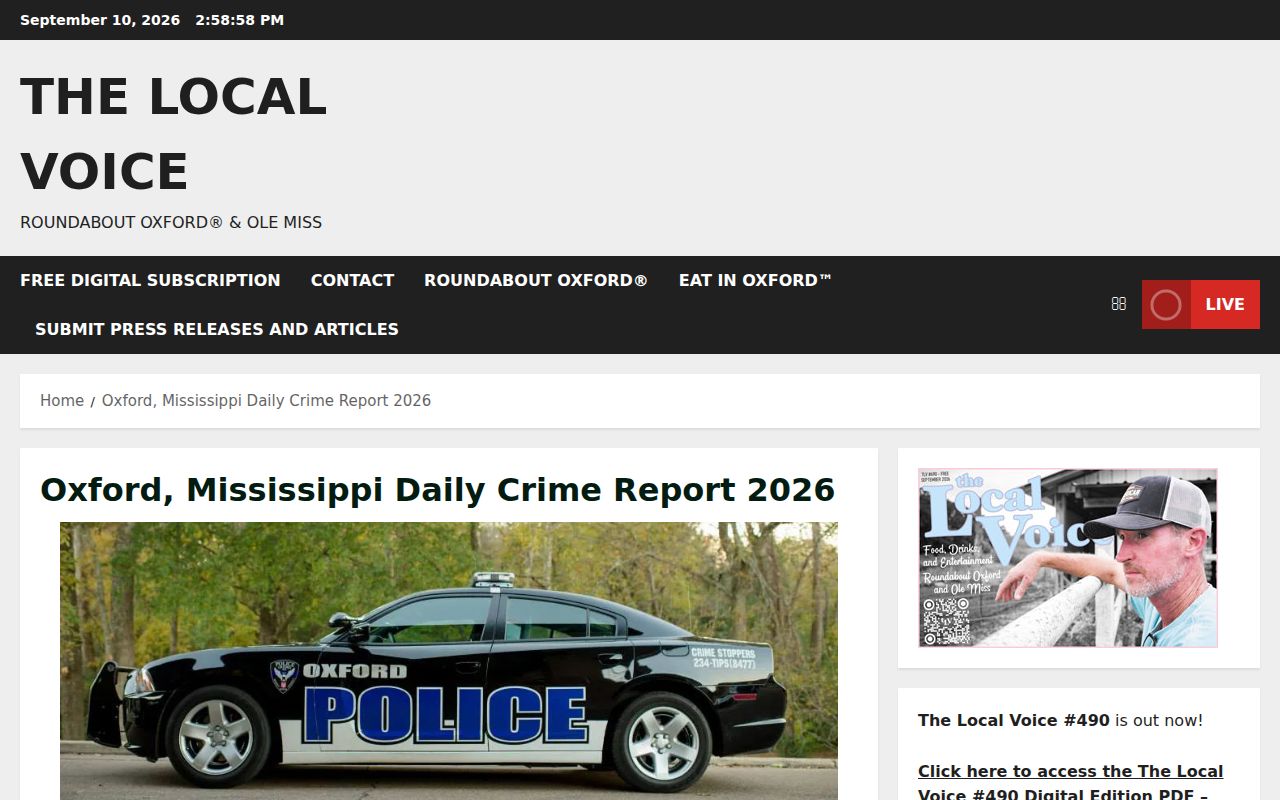
The capture illustrates a reporting format, not an official current-custody database or mugshot gallery.
How to Read the County Blotter
Start with the dated entry. Then trace it back to the government record, so news publication, jail custody, and court outcome never blur together.
- Open the dated Local Voice report and identify the covered day or grouped date range, not merely the page’s URL slug.
- Record the named agency, charge wording, and publication date. Keep arrests separate from incident reports, tickets, and accidents appearing in the same post.
- Use the official sheriff app or call the Lafayette County Detention Center at (662) 234-6421 if the question is present custody.
- Consult the appropriate court for the case number and disposition. Agency and charge type determine whether Justice Court, Oxford Municipal Court, County Court, or Circuit Court is relevant.
- Use the county records-request route for an older booking record that has moved beyond the public-facing window.
The Arrests Last 24 Hours workflow puts the official app and direct jail confirmation first. A blotter works better for a broad, retrospective search.
What an Arrest-Log Entry Shows
Every source shows different fields. A news story may just summarize an agency's release. A jail log lays out structured booking fields instead. Keep the source's own wording, and never fill gaps using someone with a similar name.
| Field | Interpretation |
|---|---|
| Name | A search key requiring identity confirmation. |
| Report date or date range | The period covered by the article, which may differ from publication time. |
| Arresting agency | Identifies who created the arrest or incident record. |
| Charge wording | The charge as reported. |
| Booking number | A jail identifier found in some structured records, not every news report. |
| Booking or release date | A custody event that must not be inferred from article age. |
| Photograph | Not governed by a verified county browser policy; absence proves nothing about the record. |
One historical 2019 Lafayette in-custody list held names, charges, birth dates, booking numbers, booking dates, and release dates. It hints at what a county record can contain. But it is not a current feed and says nothing about today's posting habits.
Oxford Reports Mix More Than Arrests
The Local Voice's combined format defines this blotter. Arrests sit right beside calls for service. Incident reports, wrecks, and ticket counts share the space. That wider lens shows which agency handled an event. It also places the event in the day's public-safety picture. It cannot say whether an arrested person was booked, released, or transferred. The Lafayette County Detention Center tag gathers detention and arrest stories. It offers no fixed booking window.
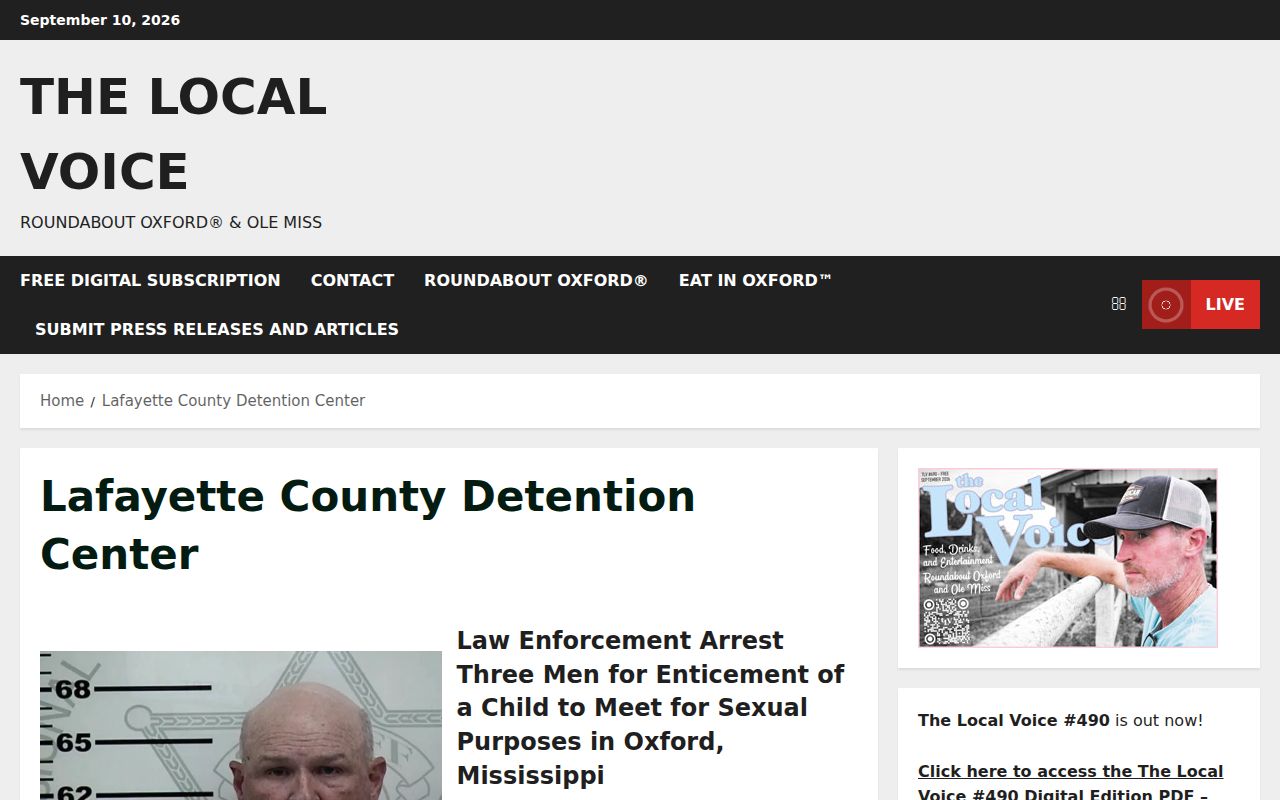
That archive surfaces narrative coverage. The detention center itself answers present custody. The Oxford Eagle police archive is another dated route. No continuous daily cadence is claimed for it. Older pieces may carry agency-provided photographs, but a news archive is never an official booking-photo repository. Each story's date and agency attribution must be checked on its own. A story adds context; it does not supply custody status.
Official Records Before Third-Party Listings
Climb an evidence ladder. The sheriff app or jail answers county custody, and a dated local report adds narrative. The court carries the case. The government custodian keeps retained records. The Mississippi Department of Corrections matters only after someone enters state custody. Don't merge these into one timeline unless identifiers and dates line up. RecentlyBooked's Lafayette County page is the one county-local aggregator worth noting. It shows rolling compiled data with its own update stamp. But it is not the county roster. Its entries can be stale, duplicated, or mismatched. Treat it as a lead behind the official channels. The RecentlyBooked page documents that unofficial third-party presentation.
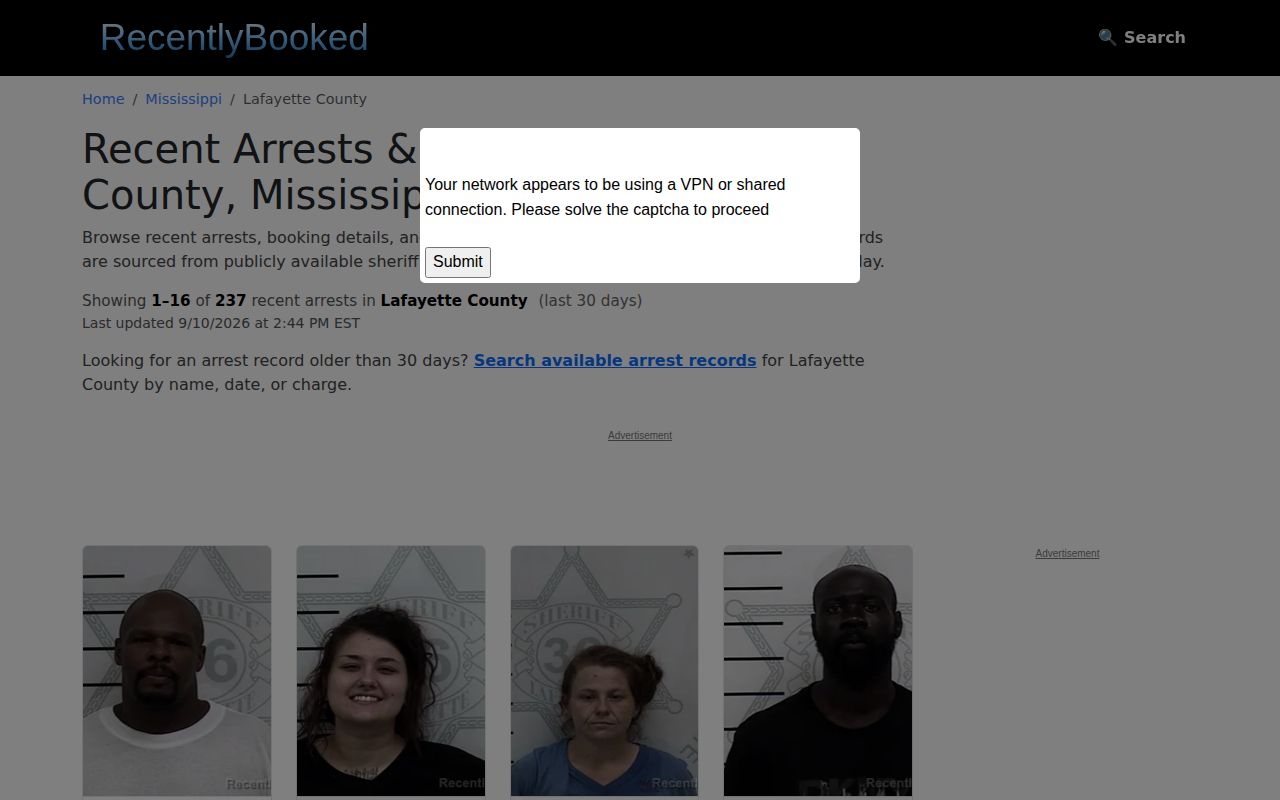
Busted Newspaper, Mugshots.com, Arrests.org, and Mugshots.zone list no Lafayette County, Mississippi section. Watch for a Lafayette result under Arkansas or Louisiana. That is a different jurisdiction and useless for Mississippi records.
Where Older Arrest Records Continue
News pages and app entries roll off over time. The underlying government record often survives. Mississippi's county retention schedule splits these into series. Jail census records are kept five years. Inmate files are kept ten years after release. Arrest reports run ten years after a case closes. The sheriff's permanent jail docket is retained for good. A records request should name the person and give an approximate birth date. State the arrest or booking date range. Include the booking number and arresting agency if known. The county publishes a seven-day response statement, a $0.25-per-page copying charge, and staff-time costs. For a broad historical search, ask for a cost estimate first. Older court material may sit with the clerk or surface through archival discovery. A permanent docket proves a historical receipt into jail, not present custody. A news archive proves an outlet reported a story, not how the charge ended. Note: Label every archive result by its record holder, date range, and custody state before you rely on it.
From Blotter Entry to Case Outcome
Lafayette County Justice Court takes the weightier dockets. Felonies out of Oxford, the county, and the University land there, along with misdemeanors and certain traffic cases. Oxford Municipal Court works a narrower lane. It covers city ordinance violations and state misdemeanors inside city limits. Sheriff, MHP, and University arrests get routed straight to Justice Court instead. Knowing which court holds the file saves time when a blotter entry needs follow-through.
For a fuller lookup path, start with Lafayette County Recent Arrests. Match names through stable identifiers rather than spelling alone. Keep booking dates separate from article dates. Then close the loop with the court record itself. The blotter gives days of useful context, but its edges stay real.